Artificial intelligence, 3D printing and emerging tooth biofabrication technologies will be among the subjects examined at the Digital Dentistry Society’s 2026 conference, as researchers and clinicians explore how digital tools could change dental diagnosis and treatment.
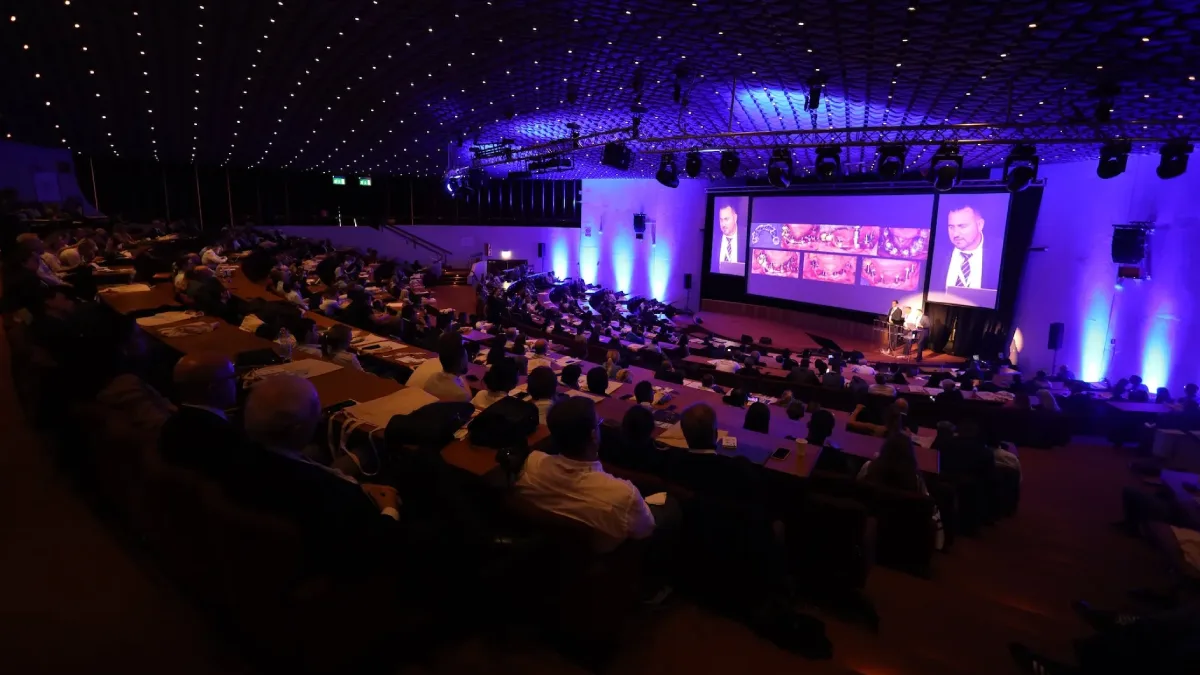
The DDS State of the Art Conference will take place in Antwerp, Belgium, on October 16–17, bringing together dental professionals and researchers to discuss the clinical applications and limitations of digital technologies.
Under the theme Digital Dentistry Unlocked, the scientific program will cover AI-assisted imaging, digital orthodontics, implant dentistry, endodontics, 3D printing and emerging regenerative technologies.
Artificial intelligence will feature in discussions on dental radiology, with particular attention to diagnostic accuracy, radiation protection and treatment planning.
A session led by Erwin Berkhout and Reinhilde Jacobs will examine how AI-assisted imaging can be used to optimize radiological examinations, reduce imaging artifacts and support clinical decision-making.
The program will also address the ethical considerations and limitations of AI in dental diagnostics, including the appropriate use of imaging technologies and radiation exposure for patients and professionals.
The practical applications of these technologies will be explored during a separate pre-conference workshop on October 15.
Participants will examine AI-assisted virtual diagnostics, treatment planning and the creation of digital patient models. Another workshop will focus on the integration of 3D printing into dental practices, including equipment requirements, suitable materials and chairside production workflows.
One of the conference’s more forward-looking sessions will examine the potential of digital technologies in treating tooth loss among children.
The session, titled Digital Workflow in Children: Towards Tooth Biofabrication, will address a particular clinical challenge: conventional dental implants are generally unsuitable for growing children.
Speakers Alina Paganini, Mostafa Ezeldeen and Pierre Lahoud will discuss digital approaches to tooth autotransplantation and research into tooth root biofabrication.
The session will examine both the possibilities and limitations of these approaches, rather than presenting biofabrication as an established clinical treatment.
Regenerative technologies will also feature in a separate presentation by Lorenzo Moroni on medical and dental bioprinting.
The session will explore how living cells and biomaterials can be used to create three-dimensional structures, as well as the technical challenges that remain before such technologies can be translated into clinical applications.
Alongside emerging research, the conference will examine digital technologies already being integrated into dental workflows.
Sessions on October 17 will address digital implant planning, guided surgery, intraoral scanning and the use of 3D printing in clinical dentistry.
The 3D printing program will cover applications including dental models, surgical guides, orthodontic appliances, temporary crowns and dentures, with discussions on the advantages and limitations of different technologies and materials.
The conference’s combination of established digital workflows and emerging research will provide a forum for examining where these technologies currently fit into dental care and which clinical challenges remain.
The DDS State of the Art Conference 2026 will take place on October 16–17 at Hilton Antwerp Old Town in Antwerp, Belgium, with pre-conference workshops scheduled for October 15.