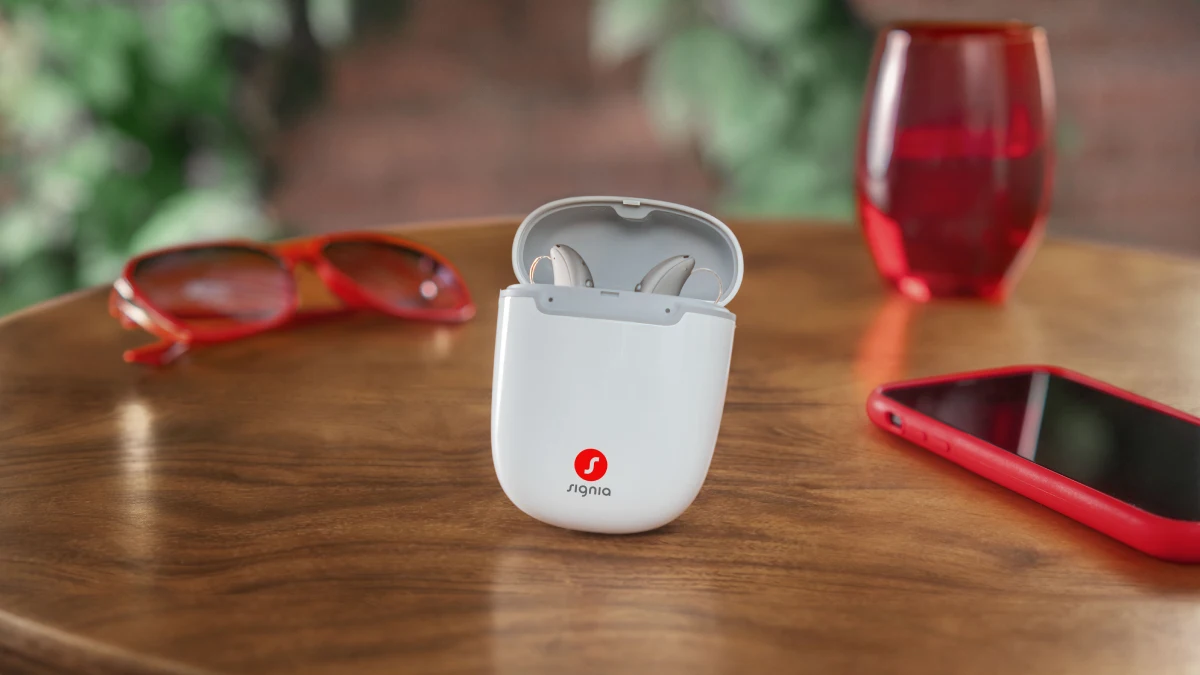
Signia’s new MaX hearing aid platform uses four artificial intelligence networks to process speech, background noise and surrounding sounds simultaneously, aiming to help wearers follow conversations in busy environments.
Hearing aid manufacturer Signia has introduced its Multi-adaptive Xperience (MaX) platform to the Canadian market, expanding the availability of a new generation of AI-powered hearing technology.
The system is designed to address a common challenge for hearing aid users: following conversations when several people are speaking at the same time.
Rather than focusing exclusively on reducing background noise, MaX analyzes different elements of the surrounding sound environment. The technology is intended to help users hear multiple conversation partners while maintaining awareness of other sounds around them.
Signia announced the platform’s initial launch in August 2026, with the Canadian introduction following in September.
At the center of MaX is a technology Signia calls Acoustic Intelligence, which combines four specialized deep neural networks.
Each network handles a different task: identifying speech, recognizing the wearer’s own voice, analyzing the surrounding environment and processing background noise.
The networks share information continuously, allowing the hearing aids to adjust how they process sound as the listening environment changes.
For example, when someone moves from a quiet room into a busy restaurant, the system is designed to adapt to the new acoustic conditions. If several people begin speaking, it can identify and enhance multiple conversation partners rather than concentrating on a single voice.
Signia says the technology also helps prevent the wearer’s own voice from sounding unnatural, an issue that can affect the experience of using hearing aids.
The company reports that its new MaX chip provides 54 times more processing power and 50% greater energy efficiency than its previous Signia IX platform. These figures are based on the manufacturer’s own comparisons.
The first hearing aid to use the platform is the Pure Charge&Go MaX, a rechargeable model designed to fit behind the ear.
The device supports Bluetooth Classic and LE Audio, allowing users to connect to compatible smartphones and other audio devices.
It also includes support for Auracast, a technology that allows compatible devices to receive shared audio broadcasts in locations such as airports and other public spaces.
However, Signia says full Auracast functionality will be enabled through a software update scheduled for March 2027.
The hearing aids come with a portable charging case capable of storing up to four full charges. According to the manufacturer, a 30-minute charge provides up to six hours of use, while a full charge takes approximately four hours.
What do the performance claims mean?
Signia has published research supporting its claims about improved speech understanding in noisy group conversations.
The company’s testing examines how the MaX platform performs compared with its previous technology and selected competing hearing aids.
However, those findings come from manufacturer-associated research and should not be interpreted as a guarantee that every wearer will experience the same improvement.
Individual results can vary depending on the degree of hearing loss, the listening environment and how the hearing aids are fitted.
The MaX platform is part of a broader move toward hearing devices that analyze changing sound environments rather than relying on fixed listening settings.
For wearers, the intended benefit is straightforward: making everyday conversations easier to follow without having to manually adjust their hearing aids whenever their surroundings change.